Insider Buying Signals and Their Implications for Spruce Power Holding Corp.
Context of the Recent RSU Grant
On 24 June 2025, Spruce Power Holding Corp. awarded 75 000 restricted stock units (RSUs) to an unnamed individual who is later identified as Miller John P. The grant, priced at zero, will vest on 24 June 2026 and is contingent upon continued service. While this is a grant rather than a cash purchase, it reflects management’s confidence in Spruce Power’s future and grants the owner a substantial, future‑locked equity stake that will become liquid in exactly one year. The award coincided with a modest 0.02 % uptick in the stock price, suggesting the board’s intention to buoy sentiment without a significant cash outlay.
Investor Implications
Miller’s prior purchase of 48 232 shares in August 2024 and the current RSU award have increased his holdings to 155 593 shares, representing over 35 % of the 444 000 shares outstanding (based on the 2026 market cap of $93.9 million). This level of insider ownership exceeds the 30 % threshold that typically triggers additional scrutiny in the utilities sector. If Spruce Power maintains its current growth trajectory and converts its negative earnings multiple into a positive, the RSUs could deliver substantial upside. Conversely, if revenue streams fail to materialise, the vesting of 75 000 shares could dilute the market and depress the share price.
Recent Company‑Wide Activity
The bulk of insider activity in 2026 has come from Steel Partners Holdings GP Inc., which purchased more than 3.2 million shares, accounting for a staggering 30 % of outstanding shares. Steel Partners’ aggressive buying spree, at prices just above $5, indicates strong institutional confidence in Spruce Power’s long‑term prospects despite the negative P/E ratio and the recent 13.5 % weekly decline. The juxtaposition of sizeable institutional buying with a large insider grant suggests that the company is positioning itself for a strategic partnership or potential acquisition, or that its asset‑heavy model is attracting investors who see value in the underlying solar installations.
Profile of Miller John P.
Miller’s historical transactions have been modest but steady. His August 2024 purchase of 48 232 shares at $0.00 (likely a grant or discounted transaction) followed by the current 75 000 RSU award signals a long‑term horizon rather than short‑term speculation. Unlike many insiders who sell to fund other ventures, Miller has not disclosed any sales in the past year; his holdings have grown from 128 825 shares in 2024 to 155 593 in 2025. This pattern—gradual accumulation via grants and low‑cost purchases—suggests he is a quiet backer who trusts the company’s business model and is willing to ride out current volatility.
Strategic Outlook for Spruce Power
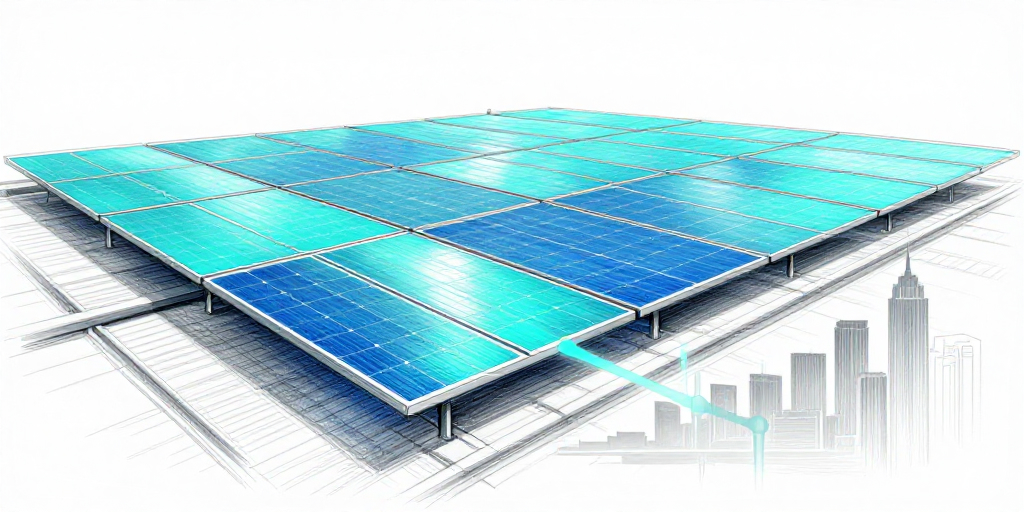
Spruce Power’s subscription‑based rooftop solar model represents a shift toward a more scalable utility structure. The company’s focus on renewable integration and grid‑stability solutions is aligned with broader industry trends toward distributed generation. However, the transition presents several operational challenges:
| Challenge | Description | Potential Impact |
|---|---|---|
| Grid Stability | Integrating intermittent solar generation requires advanced forecasting and storage solutions. | Risk of frequency deviations and voltage instability if not managed properly. |
| Renewable Integration | Ensuring seamless coupling of rooftop solar to existing transmission assets. | Potential for congestion and the need for grid upgrades. |
| Regulatory Environment | Navigating state‑level net‑metering policies and utility‑rate structures. | Uncertainty in revenue streams and cost recovery. |
| Capital Expenditure | Investment in smart‑metering, battery storage, and distribution automation. | High upfront costs with delayed payback periods. |
Regulatory changes—such as new net‑metering caps, mandatory battery storage mandates, and evolving utility rate structures—could either accelerate Spruce Power’s growth or impose constraints. For instance, stricter net‑metering caps may limit the amount of excess solar that can be fed back into the grid, reducing the company’s revenue potential. Conversely, incentives for distributed storage could enhance the value proposition of Spruce Power’s subscription model.
Infrastructure Investment and Market Dynamics
The recent institutional buying by Steel Partners underscores a broader confidence in infrastructure investment in renewable generation. Market participants are increasingly looking to utility‑scale solar and battery projects as stable, low‑carbon revenue streams. Spruce Power’s focus on rooftop solar, combined with its subscription billing model, aligns with this trend, offering a recurring revenue structure that may appeal to both utilities and institutional investors seeking predictable cash flows.
However, the company’s current negative earnings multiple and price volatility highlight the risks associated with transitioning from a high‑capital‑intensity asset model to a service‑based model. Investors will need to monitor key metrics such as:
- Customer acquisition costs (CAC) versus lifetime value (LTV) of subscription customers.
- Grid integration costs per megawatt of rooftop solar installed.
- Regulatory compliance costs related to local utility interconnection standards.
- Capital efficiency measured by return on invested capital (ROIC) once operations stabilize.
Conclusion
The combination of a large RSU award to Miller John P., aggressive institutional buying by Steel Partners, and Spruce Power’s subscription‑based rooftop solar strategy signals a growing conviction among insiders and institutional investors in the company’s long‑term prospects. While the potential upside is significant—particularly if the company can achieve positive earnings and scale its renewable offering—there remain substantial operational and regulatory challenges. The market will likely continue to tie Spruce Power’s share price to broader utilities sector sentiment and to the ongoing narrative of renewable‑energy infrastructure investment until the company demonstrates consistent cash flow generation and operational resilience.