Executive Insider Transactions and Strategic Capital Allocation at Stem Inc.
Stem Inc., a developer of artificial‑intelligence–enabled energy‑storage systems, has recently reported a series of insider transactions that underscore the company’s intent to secure additional capital for a planned equity offering. Chief Legal Officer Laureles Saul R. purchased 2,916 shares of common stock on March 7, 2026, and subsequently sold 942 shares at $11.12 per share on March 10 to cover tax obligations arising from restricted‑stock‑unit (RSU) vesting. The net effect of these actions is a modest increase in her ownership, from 27,450 shares post‑sale to 28,392 shares after the RSU conversion, amounting to approximately $31,700 in cash outlay.
The transaction is part of a broader pattern of insider activity. CEO Arun Narayanan and President Matthew Tappin also executed purchases of 18,125 and 1,458 shares respectively. All transactions are tied to RSU conversions or performance‑stock‑unit (PSU) vesting, rather than speculative market movements, indicating that senior management’s confidence in the company’s trajectory is grounded in its capital‑intensive growth strategy.
Capital Structure Implications
The cumulative insider purchases, while modest in dollar terms, signal a leadership endorsement that is often interpreted by market participants as a positive indicator of future performance. Stem’s planned equity issuance, announced in March 2026, is expected to raise capital that will be allocated toward the expansion of its renewable‑energy platform, specifically the development of AI‑driven battery‑management systems. The additional capital is also projected to strengthen the company’s balance sheet, reduce leverage, and support ongoing research and development (R&D) initiatives in advanced energy‑storage technologies.
From a financial standpoint, the equity offering carries the potential for shareholder dilution. However, the strategic intent behind the issuance—namely, to capture increasing demand for renewable‑energy storage solutions—suggests that the long‑term value creation outweighs the short‑term dilution risk. The company’s share price has exhibited significant volatility, with a weekly surge of 14.32 % juxtaposed against a yearly rise of 26.28 %. In this context, the capital raise is positioned to provide a buffer against market swings and to enable accelerated product development cycles.
Manufacturing and Technological Trends
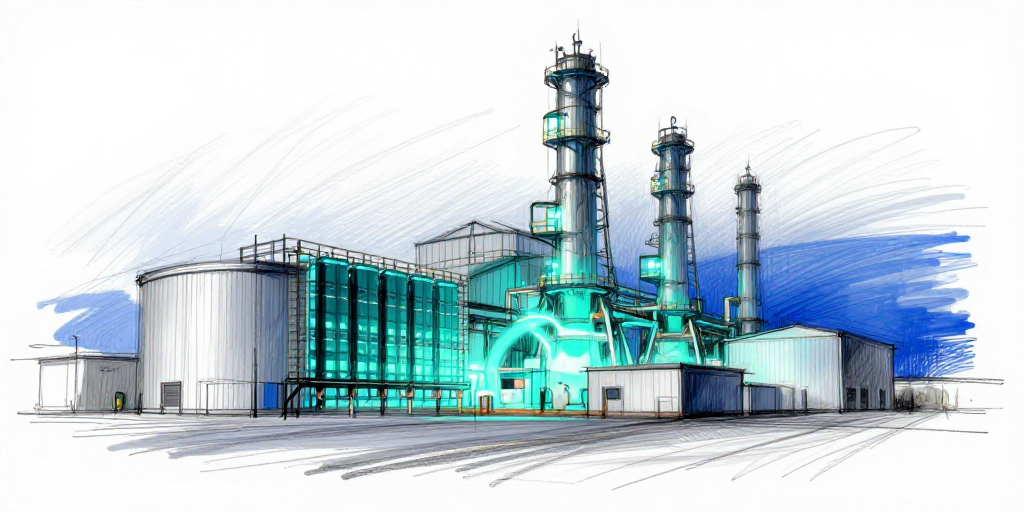
Stem’s core competency lies in integrating AI algorithms with battery‑management hardware to deliver high‑efficiency, long‑life storage solutions. The company’s manufacturing footprint includes a modular production line capable of scaling output in response to demand spikes. Recent upgrades have focused on automation, process optimization, and the implementation of predictive maintenance systems. These enhancements are expected to reduce cycle times and improve yield rates, thereby boosting overall productivity.
The AI‑driven architecture allows for real‑time optimization of charge/discharge cycles, leading to a projected 7–9 % increase in energy‑density performance relative to conventional lithium‑ion systems. Coupled with a modular design, these advancements facilitate rapid deployment across diverse applications—from microgrid integration to electric‑vehicle (EV) charging stations—expanding Stem’s market reach.
Broader Economic Impact
The investment in AI‑enabled energy‑storage technology has implications that extend beyond Stem’s balance sheet. By improving the efficiency and reliability of renewable energy generation, Stem’s products support grid decarbonization efforts and contribute to national energy security objectives. The anticipated expansion in manufacturing capacity is likely to generate employment in high‑skill manufacturing and R&D sectors, stimulating local economies.
Moreover, the company’s focus on advanced manufacturing practices aligns with broader industrial trends toward Industry 4.0. The integration of AI, machine learning, and data analytics in production processes is expected to set new benchmarks for productivity, enabling other firms in the energy‑storage sector to emulate Stem’s model. This diffusion of technology could accelerate the overall pace of innovation in renewable‑energy infrastructure, fostering a more resilient and sustainable energy ecosystem.
Conclusion
The insider transactions at Stem Inc. reflect a leadership that is strategically positioning the company to capitalize on emerging opportunities in the AI‑driven energy‑storage market. The planned equity issuance, coupled with targeted manufacturing upgrades, is designed to enhance productivity, secure critical capital, and reinforce the company’s competitive advantage. While shareholder dilution remains a consideration, the potential for long‑term value creation—both for investors and for the broader economy—appears compelling. Investors and industry observers should monitor the timing and scale of the equity offering, as well as subsequent insider activity, to gauge the company’s trajectory and its impact on the renewable‑energy manufacturing landscape.