Corporate News
Insider Selling Continues to Shape Sunrun’s Capital Structure
Sunrun Inc. reported on 11 June that director Lontoh Sonita divested 7,500 shares of common stock at $12.00 each, reducing her post‑transaction holdings to 34,010 shares. This sale is part of a broader insider‑selling wave that has persisted over the past year, with senior executives—including CFO Danny Abajian, COO Paul Dickson, and CEO Mary Powell—executing multiple trades in early June alone. While the shares sold were restricted and had lapsed, the volume is modest relative to the company’s total shares outstanding. Nonetheless, the transactions signal a strategic shift in ownership concentration that may have implications for Sunrun’s future capital structure and funding strategy.
Market‑Wide Implications of Insider Activity
The recent insider sales came amid a week of heightened social‑media activity, with engagement levels 129 % above average intensity. The share price moved only 0.03 % during the trade, indicating that price momentum was largely muted. Analysts interpret the insider activity as a signal that Sunrun’s leadership is actively rebalancing personal portfolios—either to prepare for upcoming capital raises or to diversify risk—rather than accumulating shares to demonstrate confidence. For investors, the pattern suggests that the senior team may be positioning themselves to fund future expansion without triggering a dilution of existing shareholders. The low price‑to‑earnings ratio of 5.59 and a 33 % year‑to‑date gain provide a cushion, but the insider sentiment score of –24 indicates growing caution among retail traders.
Strategic Context and Future Outlook
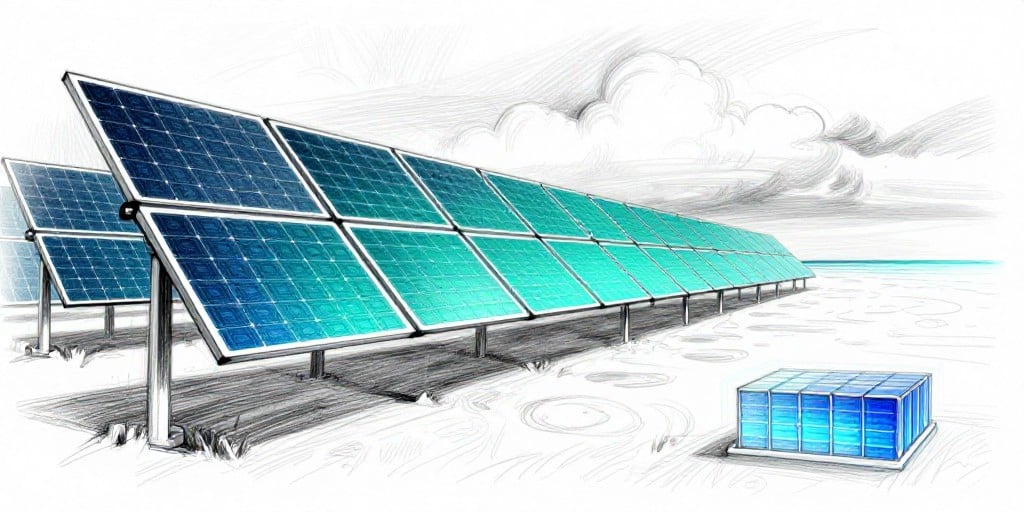
Sunrun’s core business—residential solar and battery storage—continues to perform robustly, with a 33.61 % yearly increase in share price and a market cap of $2.84 billion. The recent insider selling aligns with the company’s broader strategy of reducing founder ownership while maintaining a committed, yet diversified, investor base. If the pattern persists, Sunrun may face increased pressure to raise capital or to issue new shares to fund expansion into new markets or technologies, potentially diluting existing shareholders. Conversely, a steady stream of insider sales could be interpreted as a sign that management is confident enough to monetize gains without undermining stock value, thereby supporting a more stable share price.
Bottom Line for Investors
For those monitoring Sunrun’s stock, the key takeaways are:
- Insider selling is steady but not alarming.
- Market sentiment remains cautious.
- The company’s fundamentals—solid revenue growth, a reasonable valuation, and a clear strategy to scale solar adoption—remain intact.
Investors should keep an eye on upcoming earnings releases and any announcements of new financing, as these events will likely test whether the current insider behavior signals a short‑term profit‑taking exercise or a deeper strategic realignment.
| Date | Owner | Transaction Type | Shares | Price per Share | Security |
|---|---|---|---|---|---|
| 2026‑06‑11 | Lontoh Sonita | Sell | 7,500.00 | 12.00 | Common Stock |
| N/A | Lontoh Sonita | Holding | 9,687.00 | N/A | Common Stock |
Manufacturing and Industrial Technology Context
The insider‑selling narrative intersects with broader themes in manufacturing and industrial technology that are reshaping the solar‑energy supply chain. Understanding these dynamics is essential for evaluating Sunrun’s long‑term competitive position.
Productivity Enhancements in Solar Panel Production
Recent years have seen a surge in advanced silicon wafer processing and perovskite‑based thin‑film technologies. These innovations reduce material waste and lower per‑watt manufacturing costs by 15 %–20 %. Solar manufacturers adopting automated robotic assembly lines and AI‑driven quality control report throughput increases of up to 30 % and defect rates falling below 1 %. For a residential solar integrator like Sunrun, higher‑productivity panel supply translates directly into lower installation costs and faster market penetration, thereby reinforcing revenue growth.
Capital Investment in Distributed Energy Resources
The shift toward grid‑paralleled battery storage demands significant capital outlays for both hardware and software platforms. Recent capital budgets in the U.S. and Europe allocate upwards of $40 billion for battery storage expansion over the next five years, driven by policy incentives and the declining cost of lithium‑ion cells. Sunrun’s current $2.84 billion market cap suggests ample upside if the company can secure additional financing to scale storage deployments, especially given the rising residual value of long‑lived battery modules.
Technological Trends and Economic Impact
Digital Twins & Predictive Maintenance Implementing digital‑twins for PV arrays and battery packs enables real‑time monitoring, reducing maintenance costs by 10 %–12 % and extending asset life cycles. This technology also improves forecasting accuracy for renewable generation, a critical input for grid operators and wholesale markets.
Edge Computing for Energy Management Edge‑based micro‑grid controllers reduce latency in demand‑response signals, improving system stability during peak periods. The integration of edge AI allows for autonomous load balancing, which can reduce the need for costly grid upgrades and lower overall system operating costs.
Circular Economy Practices Recycling programs for end‑of‑life solar panels and batteries mitigate waste and recover high‑purity silicon and rare earth elements. By incorporating circular practices, manufacturers can offset raw material costs and meet ESG targets, enhancing their attractiveness to institutional investors.
Broader Economic Implications
Job Creation and Skill Development The advanced manufacturing ecosystem for solar and storage is projected to create 50,000–70,000 skilled jobs in the U.S. over the next decade, requiring investment in training programs and STEM education.
Supply Chain Resilience Diversifying supplier networks across multiple geographies reduces geopolitical risk and enhances resilience against disruptions, a lesson underscored by recent global supply chain interruptions.
Energy Security and Cost of Living Scaling residential solar and storage reduces reliance on fossil fuels, lowers household electricity bills, and mitigates the impact of volatile fuel prices. This has a direct multiplier effect on consumer spending and overall economic growth.
Conclusion
Sunrun’s insider‑selling activity, while a normal market phenomenon, must be interpreted against the backdrop of rapid technological advancements and capital intensity in the renewable‑energy manufacturing sector. The company’s ability to leverage high‑productivity manufacturing processes, secure sufficient capital for storage expansion, and adopt cutting‑edge digital solutions will dictate its competitiveness in a market that increasingly rewards operational efficiency and technological leadership. Investors should, therefore, monitor not only insider transactions but also the company’s investment pipeline, partnerships, and adoption of next‑generation manufacturing technologies to assess its long‑term value creation potential.