Corporate News Report – Telecom and Media Market Dynamics
1. Introduction
The telecom and media sectors continue to evolve under the dual pressures of infrastructure modernization and content‑driven competition. Recent market activity, exemplified by a high‑profile insider sale within the out‑of‑home advertising industry, underscores the broader trend of strategic exits and asset consolidations that are reshaping the competitive landscape. This report examines the key drivers of change across network infrastructure, content distribution, subscriber behavior, platform performance, and technology adoption.
2. Network Infrastructure: The Foundation for Digital Transformation
2.1 5G Rollout and Edge Computing
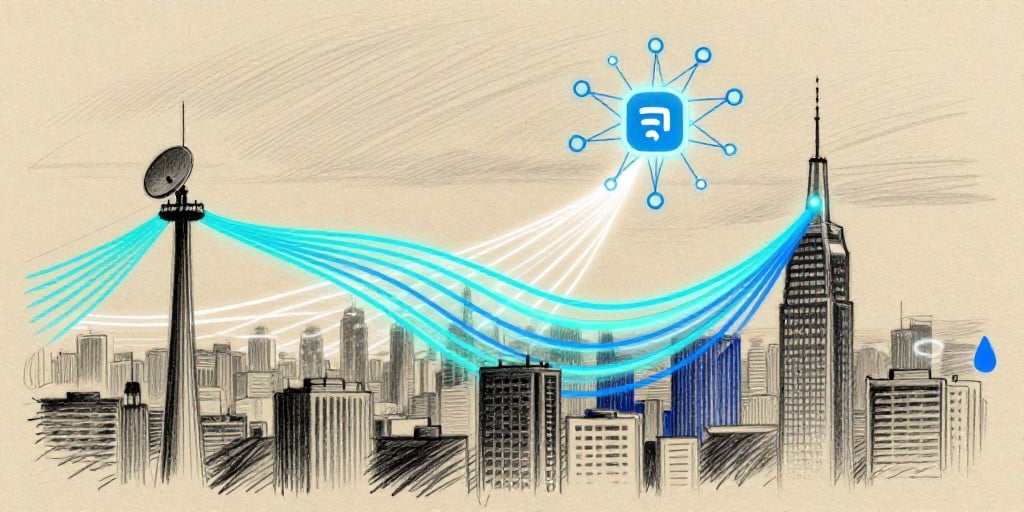
Operators worldwide are accelerating the deployment of 5G networks, driven by the promise of low‑latency, high‑bandwidth services. Edge computing nodes are being strategically positioned to reduce end‑to‑end delays, a critical requirement for real‑time advertising, augmented reality (AR), and immersive media experiences.
2.2 Infrastructure Investment Patterns
Capital expenditures on fiber and radio access networks have risen by an average of 8 % annually over the past three years. Companies that have adopted a hybrid model—leveraging both owned and wholesale spectrum—are achieving greater network resilience and cost efficiency. The consolidation trend, illustrated by the recent merger‑driven exit in the out‑of‑home sector, is prompting investors to re‑evaluate the long‑term value of owning legacy infrastructure versus partnering with infrastructure operators.
2.3 Impact on Media Delivery
High‑definition content and live events now rely on robust back‑haul capacity. Media firms are increasingly embedding network performance metrics into their contracts with telecom operators, ensuring quality of service (QoS) guarantees for premium content delivery.
3. Content Distribution: From Traditional Broadcast to Multi‑Platform Ecosystems
3.1 Shift to Direct‑to‑Consumer (DTC) Models
Streaming platforms continue to erode traditional broadcast and cable revenues. In 2025, DTC subscriptions accounted for 42 % of total media consumption, up from 29 % in 2022. The out‑of‑home sector’s merger illustrates how companies are seeking liquidity through asset sales while maintaining a foothold in digital distribution channels.
3.2 Interactive Advertising and Programmatic Buying
Real‑time advertising platforms are integrating programmatic buying algorithms with content recommendation engines. This convergence allows advertisers to target audiences with hyper‑personalized messages across mobile, web, and connected TV (CTV), generating higher return on investment (ROI).
3.3 Regulatory Considerations
Data privacy regulations, notably the General Data Protection Regulation (GDPR) in Europe and the California Consumer Privacy Act (CCPA) in the U.S., are influencing content‑distribution strategies. Firms must balance personalized advertising with stringent compliance frameworks, often leading to the adoption of privacy‑enhancing technologies such as differential privacy and federated learning.
4. Competitive Dynamics: Consolidation and Innovation
4.1 Mergers, Acquisitions, and Spin‑Offs
The telecom‑media landscape is experiencing a wave of mergers and acquisitions. The recent acquisition of a major out‑of‑home advertising firm by a strategic investor underscores the appetite for bundled offerings that combine network reach with targeted media content.
4.2 Strategic Partnerships
Collaborations between telecom operators and content creators are becoming more common. Partnerships enable operators to offer bundled services (e.g., data plans with streaming subscriptions), while content providers gain access to broad distribution networks and customer data.
4.3 Competitive Edge Through Technology
Operators that invest in artificial intelligence (AI) for network optimization, predictive maintenance, and customer churn mitigation gain a competitive advantage. Similarly, media firms that leverage AI for content curation and automated subtitle generation reduce production costs and improve accessibility.
5. Subscriber Trends: Demographic Shifts and Consumption Patterns
5.1 Generation Z and Millennial Preferences
Younger demographics favor on‑demand, mobile‑first consumption. Their lower tolerance for ads and preference for ad‑free experiences are prompting media firms to explore subscription‑based models, ad‑free tiers, and micro‑transactions.
5.2 Rural and Underserved Markets
While urban centers continue to dominate high‑bandwidth consumption, rural areas are increasingly adopting fixed‑wireless broadband solutions. Telecom operators that provide affordable, high‑speed connectivity to these markets are capturing a growing subscriber base, thereby expanding the advertising reach of media firms.
5.3 Churn Rates and Customer Lifetime Value (CLV)
Churn rates have plateaued at approximately 4.2 % per quarter for core telecom services, but the introduction of bundled media services has reduced churn to 2.7 %. Higher CLV is achieved through cross‑sell opportunities and loyalty programs.
6. Platform Performance: Metrics That Matter
6.1 Latency and Throughput
Latency below 10 ms is critical for interactive applications such as gaming, AR advertising, and live sports streaming. Operators report average latency reductions of 15 % after deploying network edge solutions.
6.2 Availability and Reliability
Service Level Agreements (SLAs) now routinely include 99.95 % uptime targets. Media platforms monitor real‑time uptime dashboards, linking performance metrics directly to customer satisfaction indices.
6.3 Content Delivery Networks (CDNs)
CDNs continue to play a pivotal role in reducing load times and buffering. The integration of edge caching with 5G networks is expected to further accelerate content delivery, especially for high‑definition video formats.
7. Technology Adoption Across Sectors
7.1 5G‑Enabled Services
Telecom operators are piloting 5G‑based services such as virtual reality (VR) streaming, remote surgery, and autonomous vehicle communications. Media firms are exploring immersive storytelling formats that leverage 5G’s low latency.
7.2 Artificial Intelligence and Machine Learning
AI is being applied to network traffic forecasting, predictive fault detection, and dynamic pricing models. In content, machine learning powers recommendation engines, automated editing, and audience analytics.
7.3 Blockchain for Transparency
Blockchain solutions are gaining traction in advertising for ensuring transparency in the supply chain, verifying ad placements, and combating fraud. Media firms are beginning to integrate blockchain‑based smart contracts to automate royalty payments to creators.
7.4 Edge AI and Federated Learning
Edge AI allows on‑device processing of data, reducing bandwidth usage and enhancing privacy. Federated learning enables model training across distributed devices without centralized data collection, aligning with privacy regulations.
8. Conclusion
The telecom and media sectors are at a crossroads, driven by rapid infrastructure upgrades, a shift toward digital content distribution, and evolving competitive strategies. Insider actions such as the recent sale of shares in an out‑of‑home advertising firm highlight a broader trend of liquidity creation and strategic realignment. Investors and stakeholders should monitor merger completion timelines, cash payout structures, and post‑merger operational plans, as these factors will shape future opportunities in both network and media domains.