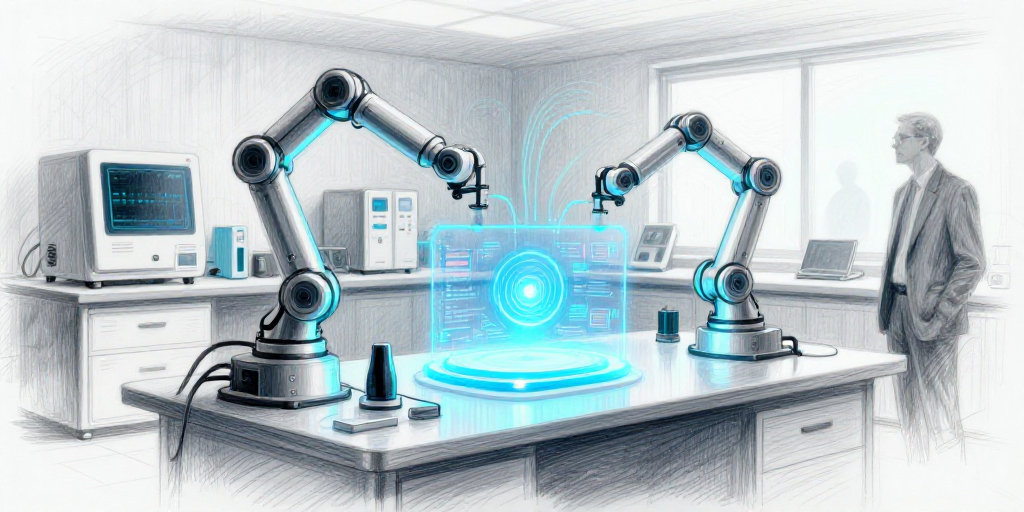
Insider Buying at Teradyne Signals Confidence in AI‑Shift
On March 13, 2026 former director Paul Tufano purchased 25 shares of Teradyne’s common stock at a transaction price of $299.40, increasing his total holding to 64 886 shares. Although the trade size is modest, it follows a consistent pattern of incremental purchases over the past year, each transaction ranging between 36 and 357 shares and reported as “no‑price” filings for either DSUs or common stock. This pattern suggests that Tufano is acquiring shares through mechanisms that do not reveal market‑price purchases, a practice commonly used by insiders to avoid market impact while accumulating a stake.
Key Points
- Purchase Pattern – Incremental acquisitions of 36‑357 shares, all at $0.00 in the filing.
- Shareholding Level – 64 886 shares, well below 1 % of outstanding shares.
- Strategic Focus – Teradyne’s pivot to AI‑enabled testing, autonomous robotics, and silicon photonics.
What the Trade Means for Investors
Teradyne’s share price has slipped only 0.46 % this week, and its price‑earnings ratio of 85.7 indicates that the market remains pricing in high growth expectations. The insider purchase comes just before the company’s late‑April earnings, a critical touchpoint for confirming the trajectory of its AI and robotics initiatives. A sustained buying trend among insiders—such as Tufano and the recent 5‑share purchase by Peter Herweck—may be interpreted by analysts as a bullish signal, especially given Teradyne’s 238 % year‑to‑date gain and its strategic shift away from cyclical semiconductor testing toward higher‑margin AI services.
Tufano’s Insider Profile
Tufano’s purchase history shows a disciplined, low‑volume approach. Over the past 18 months he has acquired 1 200 shares in total, all at $0.00, indicating that these are likely DSU‑converted shares or stock‑option exercises rather than market‑price purchases. His consistent accumulation, combined with his role as a former director, suggests a belief in the company’s long‑term strategic direction rather than a speculative short‑term play. Investors should note that his holdings remain well below 1 % of the company’s outstanding shares, so while his actions signal confidence, they do not yet represent a controlling stake.
Implications for Teradyne’s Future
With the company’s focus on AI, silicon photonics, and robotics, Teradyne is positioning itself to capture growth in emerging technology segments that are less vulnerable to the cyclical nature of semiconductor testing. Insider buying, even at modest levels, reinforces the narrative that management and former directors are aligned with this strategic shift. Should the upcoming earnings confirm that AI and robotics revenue are accelerating, the market could reward the stock, providing a tailwind for shareholders who bought in during the recent buying wave. Investors should watch for any escalation in insider purchases, as they often precede positive earnings surprises and can serve as a barometer for confidence in the company’s trajectory.
Expert Analysis: Semiconductor Technology, Manufacturing, and Market Trends
Production Challenges and Node Progression
The semiconductor industry is currently navigating a complex production landscape. Process nodes have advanced from the 7 nm era to aggressive 3 nm and even 2.5 nm nodes, driven by demand for higher transistor density and lower power consumption. However, manufacturing challenges have intensified:
Lithography Constraints Extreme ultraviolet (EUV) lithography is now essential for 3 nm and below. The cost of EUV tools, coupled with limited throughput, constrains the number of wafers that can be processed daily. This bottleneck often leads to long lead times and higher per‑wafer costs.
Material Supply Chain Advanced nodes rely on ultra‑pure materials such as germanium, high‑k dielectrics, and advanced silicided contacts. Recent geopolitical tensions have disrupted supply chains for critical raw materials, prompting manufacturers to diversify sourcing or invest in domestic fabs.
Yield Management As feature sizes shrink, defect density increases, and yield becomes a critical metric. Even a single defect in a 3 nm die can render an entire wafer non‑sellable. Companies are adopting more sophisticated in‑line defect detection and advanced statistical process control (SPC) to mitigate this risk.
Thermal and Power Constraints With higher transistor densities, heat dissipation becomes a major issue. Innovations in 3‑D integration and silicon photonics are being explored to manage power density while maintaining performance.
Market Dynamics: From Cyclical Testing to AI‑Enabled Services
Teradyne’s pivot exemplifies a broader industry shift. Traditionally, semiconductor testing companies earned revenue from cyclical test services, closely tied to the manufacturing of discrete silicon chips. However, several dynamics are reshaping the market:
Artificial Intelligence and Machine Learning AI workloads demand massive data throughput and low latency, driving the need for specialized hardware. Test companies are developing AI‑accelerated test equipment to validate these new architectures quickly and accurately.
Silicon Photonics Optical interconnects promise higher bandwidth with lower power consumption. Teradyne’s investment in silicon photonics aligns with the industry’s move toward optical communication within data centers and edge devices.
Robotics and Automation The integration of autonomous robotics into semiconductor fabs improves throughput and reduces human error. Companies that offer end‑to‑end solutions—combining test equipment, robotics, and AI analytics—are positioned to capture higher-margin contracts.
Supply‑Chain Resilience Firms that can offer end‑to‑end testing, inspection, and validation services—including AI‑based defect analysis—are better equipped to adapt to supply‑chain disruptions. This capability enhances customer loyalty and allows for higher pricing power.
Translating Technical Details for Informed Investors
Node Progression A 3 nm process node typically delivers a 30 % increase in transistor density compared to 5 nm, enabling higher performance at lower power. However, the cost of implementing EUV lithography can be 4–5× higher than deep ultraviolet (DUV) processes, impacting the price of manufactured wafers.
Yield Impact A 1 % increase in defect density can reduce yield from 80 % to 76 % on a 3 nm wafer, translating to a 5 % drop in revenue for a fab operating at full capacity.
AI‑Enabled Testing AI‑driven test systems can reduce test cycle time by up to 40 %, cutting testing costs and improving fab utilization.
Silicon Photonics Incorporating silicon photonics can increase data bandwidth by 10 Gb/s per fiber, reducing the number of copper interconnects needed and lowering overall power consumption.
Outlook for Teradyne and the Broader Market
Teradyne’s focus on AI, silicon photonics, and robotics positions it well for the next wave of semiconductor innovation. While insider purchases remain modest, the trend of incremental buying by former directors and current executives suggests a collective belief in the company’s long‑term strategic direction. For investors, the upcoming earnings report will be a critical indicator: confirmation of accelerated revenue growth in AI and robotics segments could validate the current market valuation, while any slowdown might prompt a re‑evaluation of the company’s growth narrative.
In the wider semiconductor ecosystem, firms that can navigate the complex production challenges of advanced nodes, while diversifying revenue streams beyond traditional testing, are likely to emerge as leaders. As AI workloads continue to proliferate and supply‑chain resilience becomes paramount, the demand for integrated testing, inspection, and validation solutions—bolstered by AI and photonic technologies—will only intensify. Investors and analysts should therefore monitor both insider activity and the company’s execution on its technology roadmap to gauge future performance.