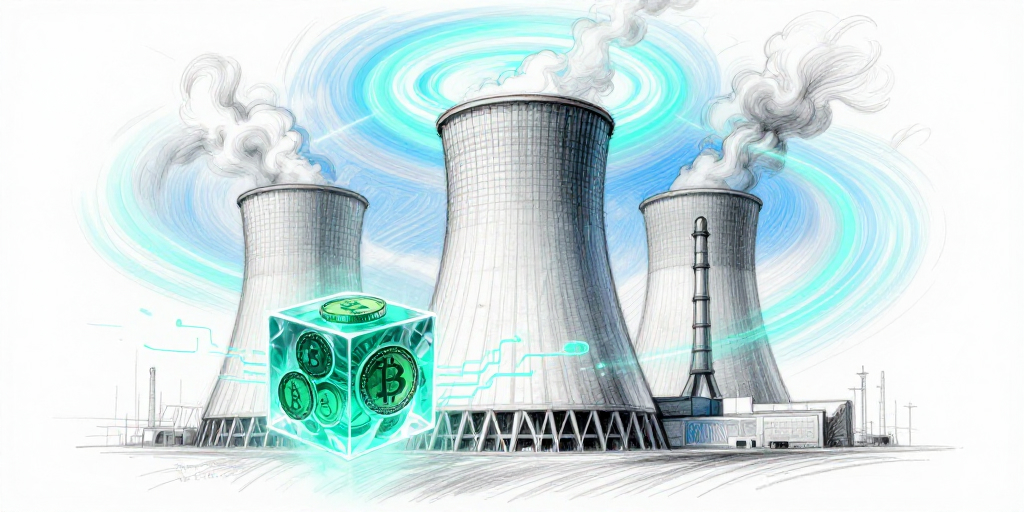
Corporate News: Insider Buying Spree at Terawulf Inc. Raises Questions for Investors
Emerging Technology and Cybersecurity Context
Terawulf Inc.’s recent insider transactions underscore a broader industry trend where cryptocurrency mining firms are increasingly leveraging advanced, low‑carbon power sources—namely nuclear and hydro‑electric facilities—to power their hash‑rate. While these assets provide a competitive edge in terms of energy cost and sustainability, they also introduce a new vector for cybersecurity threats. The convergence of high‑value digital assets with complex, distributed power‑grid infrastructure amplifies the attack surface for both cybercriminals and nation‑state actors.
Key cybersecurity implications:
- SCADA and IoT Vulnerabilities
- Mining operations rely heavily on Supervisory Control and Data Acquisition (SCADA) systems to monitor and control power usage. These legacy systems are notoriously susceptible to ransomware and denial‑of‑service attacks.
- The integration of Internet‑of‑Things (IoT) sensors across nuclear facilities expands the attack surface, increasing the likelihood of data exfiltration or sabotage.
- Cryptocurrency‑Specific Threats
- Double‑spending and 51% attacks remain a concern for decentralized ledgers. Terawulf’s mining output, if not adequately protected, could be targeted for hash‑rate manipulation, potentially undermining the integrity of the block chain and eroding investor confidence.
- Phishing and social‑engineering campaigns tailored to mining staff can compromise private keys, enabling unauthorized access to mined assets.
- Regulatory and Compliance Risks
- The U.S. Securities and Exchange Commission (SEC) and the Federal Energy Regulatory Commission (FERC) are increasingly scrutinizing the intersection of renewable energy, nuclear power, and digital asset mining. Failure to comply with emerging reporting requirements—such as the SEC’s proposed Cybersecurity Disclosure Rule—could result in fines and reputational damage.
- Internationally, the European Union’s Digital Services Act and the EU Cyber Resilience Act impose stringent data protection and incident response obligations on firms that process large volumes of sensitive data, including crypto‑mining operations.
- Operational Resilience
- A successful cyberattack could cripple power distribution to mining rigs, leading to substantial revenue loss. In the event of a nuclear facility compromise, the stakes multiply to include public safety concerns and catastrophic financial penalties.
Societal and Regulatory Implications
Terawulf’s strategy of deploying nuclear‑powered mining operations has attracted attention beyond traditional finance and technology circles. From a societal perspective, the company positions itself at the nexus of energy transition and digital economy, raising questions about:
- Energy Equity and Local Communities
- The deployment of large nuclear facilities may face opposition from local stakeholders concerned about environmental impact and public safety.
- Community benefit agreements could become a regulatory requirement to ensure that mining operations contribute positively to local economies.
- Environmental Footprint
- Despite lower CO₂ emissions compared to fossil‑fuel‑powered mining, nuclear energy introduces concerns related to radioactive waste management and long‑term storage. Regulators are tightening oversight on waste handling and lifecycle emissions reporting.
- Data Privacy and Consumer Protection
- The handling of operational telemetry data from SCADA and IoT devices may involve personal or sensitive information, subjecting Terawulf to GDPR, CCPA, and other privacy frameworks.
- National Security
- Governments are wary of critical infrastructure, such as nuclear facilities, becoming targets for foreign espionage or sabotage. Enhanced collaboration between industry and national security agencies is being encouraged to mitigate these risks.
Real‑World Examples
| Company | Incident | Impact | Regulatory Response |
|---|---|---|---|
| Coinbase | Ransomware attack on internal servers (2023) | $75M loss, halted trading of certain assets | SEC issued guidance on cyber risk disclosures |
| Bitmain | SCADA phishing leading to a 24‑hour power outage (2022) | $2M downtime, loss of hash‑rate | NIST updated guidelines for SCADA security |
| Terra (LUNA) | 2022 collapse of algorithmic stablecoin | $8.5B market cap wipeout | Federal Reserve issued clarifications on crypto‑asset systemic risk |
These cases illustrate how cyber incidents can translate directly into financial losses, regulatory scrutiny, and erosion of investor confidence.
Actionable Insights for IT Security Professionals
- Implement Zero‑Trust Architecture for SCADA
- Segregate mining control networks from corporate IT.
- Use multi‑factor authentication and micro‑segmentation to limit lateral movement.
- Adopt Continuous Monitoring and Threat Hunting
- Deploy SIEM solutions tailored to industrial control systems.
- Integrate anomaly detection models that flag unusual energy consumption patterns indicative of compromised rigs.
- Strengthen Key Management Practices
- Store private keys in hardware security modules (HSMs) with strict access controls.
- Regularly rotate keys and employ multi‑signature wallets for operational transactions.
- Ensure Compliance with Emerging Cybersecurity Disclosures
- Prepare detailed risk assessments in line with the SEC’s proposed rule.
- Document incident response plans and conduct tabletop exercises quarterly.
- Collaborate with Energy Sector Regulators
- Participate in industry working groups on nuclear‑powered mining.
- Stay abreast of FERC and NRC guidance on data sharing and incident reporting.
Investor Takeaway
Terawulf’s insider buying spree, conducted in the wake of a sizable Rule 144 share sale, signals that key stakeholders perceive a valuation gap. While the company’s negative P/E ratio and recent share price decline raise concerns, the disciplined accumulation pattern by Bucella Michael C. suggests a long‑term bet on the maturation of nuclear‑powered mining. Investors should, however, monitor:
- Operational Metrics: Revenue from bitcoin sales, operating margin trends, and capacity utilization.
- Cybersecurity Posture: Incident frequency, breach severity, and compliance status.
- Regulatory Developments: Any new mandates affecting energy‑intensive crypto‑mining operations.
By aligning investment decisions with these multidimensional factors, stakeholders can better navigate the intersection of emerging technology, cybersecurity risks, and regulatory landscapes that define Terawulf Inc.’s trajectory.