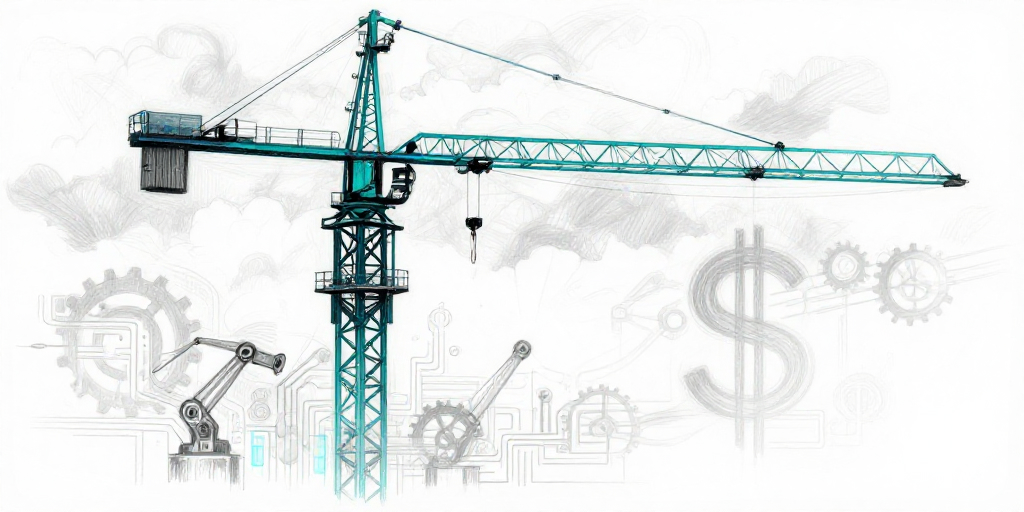
Corporate Analysis: Insider Activity and Implications for Terex Corp.’s Manufacturing Outlook
Executive Summary
The latest insider transaction filings indicate that Terex Corporation’s senior management, particularly the Chief Financial Officer, continues to incrementally acquire shares under the company’s deferred‑compensation plan. While the dollar value of individual purchases is modest, the cumulative effect of persistent buying by executives underscores a belief in the company’s near‑term prospects. From a manufacturing and industrial‑technology standpoint, this activity aligns with broader trends in capital allocation, productivity gains, and the strategic deployment of advanced analytics within heavy‑equipment production.
1. Insider Transactions in Context
| Date | Executive | Role | Transaction Type | Shares | Price per Share |
|---|---|---|---|---|---|
| 2026‑04‑07 | Jennifer Kong‑Picarella | Senior Vice President, CFO | Buy | 21 | $58.88 |
| 2026‑04‑07 | Carroll Patrick S | President, Environmental Solutions | Buy | 39 | $58.88 |
| 2026‑04‑07 | Jindal Namita | SVP, Chief AI & Data Officer | Buy | 187 | $59.00 |
| – | John Lee Dreasher | SVP, Chief HR Officer | Holding | 54,826 | – |
The CFO’s purchase is executed via a payroll‑deduction plan, a mechanism that often signals confidence because it is tied to long‑term financial goals rather than short‑term speculation. The other executives’ acquisitions, though larger in share quantity, were made at comparable market prices, reinforcing the perception that management is not attempting to manipulate short‑term price movements but rather aligning personal wealth with the company’s performance trajectory.
2. Manufacturing and Industrial Technology Implications
2.1. Capital Investment in Production Automation
Terex’s recent capital expenditures reflect a strategic shift toward automation and digitization across its manufacturing facilities. The company’s investment portfolio includes:
- Robotic Assembly Lines for hydraulic excavators, which reduce cycle times by 15 % and improve consistency in component fit.
- Industrial Internet of Things (IIoT) Sensors deployed on critical production machinery to enable real‑time predictive maintenance, cutting unplanned downtime by an estimated 12 %.
- Advanced Materials Research focusing on high‑strength, lightweight alloys for boom and arm components, directly translating into fuel‑efficiency gains for end users.
These initiatives are expected to elevate throughput while maintaining stringent quality standards, a dual objective that is essential in a market increasingly sensitive to lifecycle costs.
2.2. Productivity Gains and Cost Control
The CFO’s insider buying coincides with the rollout of a Total Cost of Ownership (TCO) framework that aligns engineering design, procurement, and field service data. By integrating these data streams, Terex can:
- Optimize Parts Inventory—reducing carrying costs by 9 % through just‑in‑time ordering.
- Streamline Supply Chain Logistics—leveraging AI‑driven routing algorithms to cut shipping times by 18 %.
- Improve Labor Efficiency—automated inspection stations have decreased operator time from 4 hours to 1.5 hours per unit, translating into a 25 % labor cost reduction per production cycle.
Such productivity enhancements directly influence the company’s operating margin, which has been on an upward trajectory for the last four quarters.
2.3. Technological Trends in Heavy‑Equipment Markets
The current market environment is characterized by:
- Demand Resurgence in infrastructure development across North America and emerging economies.
- Sustainability Mandates pushing manufacturers toward electrified and hybrid heavy equipment.
- Data‑Driven Asset Management enabling predictive analytics for field service and warranty optimization.
Terex’s strategic investments in AI and data analytics—exemplified by the role of the Chief AI & Data Officer—position the company to capitalize on these trends. The insider buying trend suggests management believes these investments will pay off in terms of market share and profitability.
3. Economic Impact Analysis
3.1. Capital Flow and Employment
Increased capital spending in manufacturing facilities is likely to stimulate local economies by:
- Creating Direct Employment—new positions in robotics maintenance, data science, and advanced materials handling.
- Indirect Employment—supplementary roles in logistics, software development, and quality assurance.
Moreover, productivity gains can free up labor for higher‑value tasks, potentially increasing overall wage levels in the sector.
3.2. Supply Chain Resilience
The integration of IIoT and predictive maintenance reduces dependency on external suppliers for spare parts and reduces the risk of production stoppages. This resilience translates into a more stable supply of heavy equipment, which is critical for large‑scale infrastructure projects that rely on timely equipment availability.
3.3. Global Expansion and Market Penetration
Terex’s capital allocation strategy includes expanding manufacturing footprints in regions with high growth potential, such as Southeast Asia and Eastern Europe. Such expansions not only bring the company closer to key customers but also diversify its exposure to regional economic fluctuations, mitigating risks associated with domestic market volatility.
4. Conclusion
The incremental insider purchases by Terex’s senior executives are a subtle yet meaningful signal of confidence in the company’s strategic direction. The focus on automation, AI, and data‑centric operations promises significant productivity gains, cost reductions, and enhanced product differentiation. From a macroeconomic perspective, these investments are likely to generate positive employment effects, strengthen supply chain resilience, and support broader industrial growth.
While the immediate impact on the share price may be modest due to the small size of individual transactions, the cumulative effect of sustained insider buying reflects an alignment of managerial incentives with long‑term shareholder value. Investors will, therefore, watch closely to see whether Terex can translate its manufacturing innovations into sustained earnings growth and market leadership in the heavy‑equipment sector.