
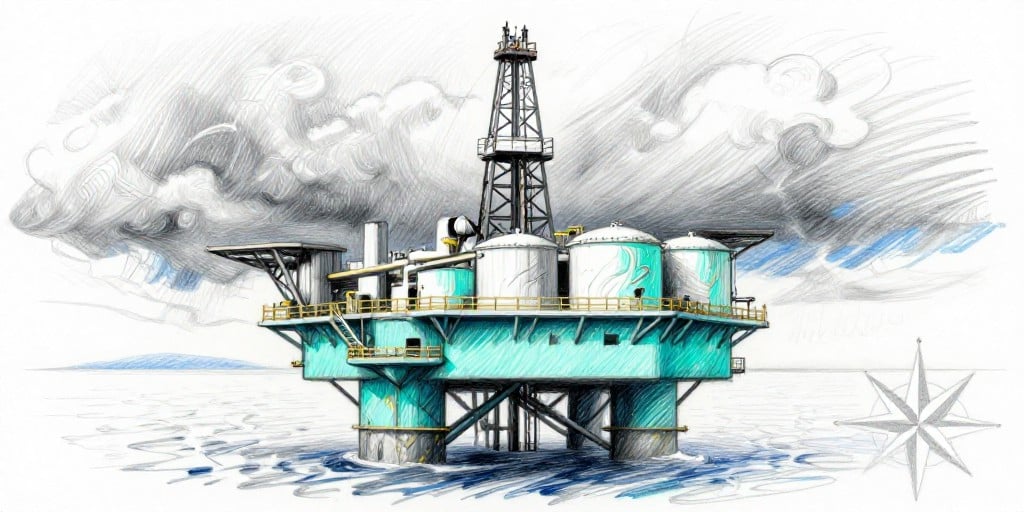
Insider Trading Activity in a Volatile Energy Market
The sale of 81,741 shares by Long Brady K, Transocean’s Executive Vice President and Chief Legal Officer, on 21 May 2026, has attracted attention amid a broader backdrop of heightened market volatility in the energy sector. While the transaction represents a modest 0.6 % reduction in Brady’s stake, its timing—coinciding with a 143 % surge in social‑media buzz and a sentiment score of +25—raises questions about short‑term market dynamics and investor expectations.
Production and Storage Trends in Energy Markets
Recent data from the U.S. Energy Information Administration (EIA) indicate that global crude oil production is stabilizing at an average of 95 million barrels per day, yet regional disparities persist. In the Middle East, production has rebounded to pre‑COVID‑19 levels, whereas OPEC‑plus members are gradually easing output cuts. This uneven rebound contributes to price elasticity, as any shift in supply can prompt rapid price adjustments.
Simultaneously, storage volumes in the U.S. have reached record highs, with approximately 70 million barrels of crude oil held in strategic reserves. The increase in storage capacity mitigates immediate supply shocks but also signals that market participants anticipate future price volatility. In the renewable energy arena, battery storage capacities have grown by 18 % year‑over‑year, driven by technological advancements and falling lithium-ion costs. However, the intermittency of solar and wind generation continues to pose challenges for grid stability, prompting regulatory bodies to consider new standards for distributed energy resources.
Regulatory Dynamics and Their Impact
Regulatory frameworks in key jurisdictions are evolving rapidly. The European Union’s Next Generation EU package, which includes significant investment in green hydrogen infrastructure, is poised to reshape the European energy mix over the next decade. In the United States, the Inflation Reduction Act provides tax credits for both fossil fuel and renewable projects, creating a complex landscape where traditional and new energy sources compete for subsidies.
In the offshore drilling sector, where Transocean operates, regulations focus on safety and environmental compliance. The International Association of Oil & Gas Producers (IOGP) has recently updated its drilling safety guidelines, imposing stricter risk management protocols. Compliance costs are projected to rise by 5 % over the next two years, potentially compressing margins for drilling contractors.
Technical and Economic Factors Affecting Energy Sectors
- Fossil Fuel Volatility
- Price Sensitivity: Crude oil prices are highly responsive to geopolitical events, such as conflicts in the Persian Gulf or sanctions on Russia. A sudden spike can generate significant short‑term profits for operators like Transocean, yet also increases the risk of overcapacity and subsequent price crashes.
- Capital Allocation: Fluctuating oil prices influence capital expenditures (CapEx) for offshore rigs. When prices are high, operators invest in new rigs and technology, whereas price downturns lead to deferments or divestitures.
- Renewable Energy Economics
- Levelized Cost of Energy (LCOE): Solar and wind LCOEs have fallen below $30 per megawatt‑hour in many regions, challenging the profitability of fossil‑fuel projects.
- Policy Incentives: Feed‑in tariffs and renewable portfolio standards can subsidize renewable projects, creating a favorable environment for investment but also exposing operators to policy risk if regulations shift.
- Storage Technology and Capacity
- Battery Costs: The average cost of lithium-ion batteries has declined by 70 % over the past decade, enhancing the feasibility of grid‑scale storage.
- Hydrogen Storage: Emerging metal‑hydride and cryogenic storage solutions promise higher energy densities but require significant R&D investment.
Geopolitical Considerations
Geopolitical tensions continue to influence energy markets. The ongoing standoff between the United States and Iran, coupled with sanctions on Russian energy exports, has led to a realignment of supply chains. European nations are diversifying their energy imports, increasing reliance on LNG and exploring domestic renewable projects. These shifts affect offshore drilling demand, as operators must adapt to changing client portfolios and regulatory environments.
Implications for Transocean and Investors
Transocean’s current negative price‑earnings ratio (-1.97) reflects the sector’s sensitivity to oil price swings and the lingering impact of the 2020‑2021 downturn. Insider selling, especially by a senior legal executive, can be interpreted in multiple ways:
- Profit‑Taking: The transaction aligns with a pattern of periodic disposals at market highs, suggesting a tactical approach to liquidity rather than a strategic shift.
- Market Signal: A large‑volume sale during a period of high social‑media buzz may dampen short‑term momentum, potentially exerting downward pressure on the share price.
- Strategic Vigilance: Investors should monitor subsequent transactions by other executives (e.g., CFO, CEO) to assess whether a broader reevaluation of shareholder value is underway.
In the context of evolving regulatory frameworks, increasing storage capacity, and geopolitical realignments, Transocean’s ability to navigate these challenges will determine its competitive position. Investors should weigh the company’s operational resilience against the backdrop of market volatility and consider how the timing of insider transactions may influence short‑term price dynamics.
Prepared for corporate investors analyzing Transocean’s strategic position within a rapidly changing energy landscape.