Corporate News – Manufacturing, Industrial Technology, and Market Dynamics
Executive Summary
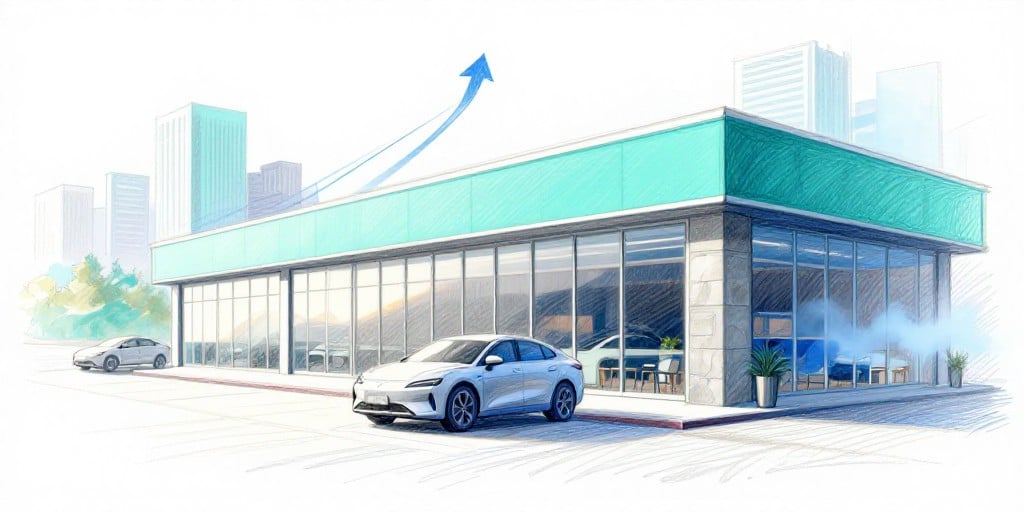
The recent insider transactions by Valvoline’s President & CEO, Lori Ann Flees, provide a micro‑case study of how corporate leadership’s capital allocation decisions reflect broader trends in manufacturing productivity, capital investment, and industrial technology. Although Valvoline is a consumer‑discretionary chemical company, its strategic pivot toward automated, franchise‑based oil‑change centers is a direct response to evolving industrial automation and data‑driven service delivery models. This article examines the technical underpinnings of those initiatives, the associated productivity gains, the capital expenditure required, and the macroeconomic implications for the manufacturing and industrial sectors.
1. The Technical Core of Valvoline’s Franchise Expansion
Valvoline’s shift toward an instant‑oil‑change franchise model is anchored in three interlocking technological pillars:
| Pillar | Technical Detail | Productivity Impact | Capital Outlay |
|---|---|---|---|
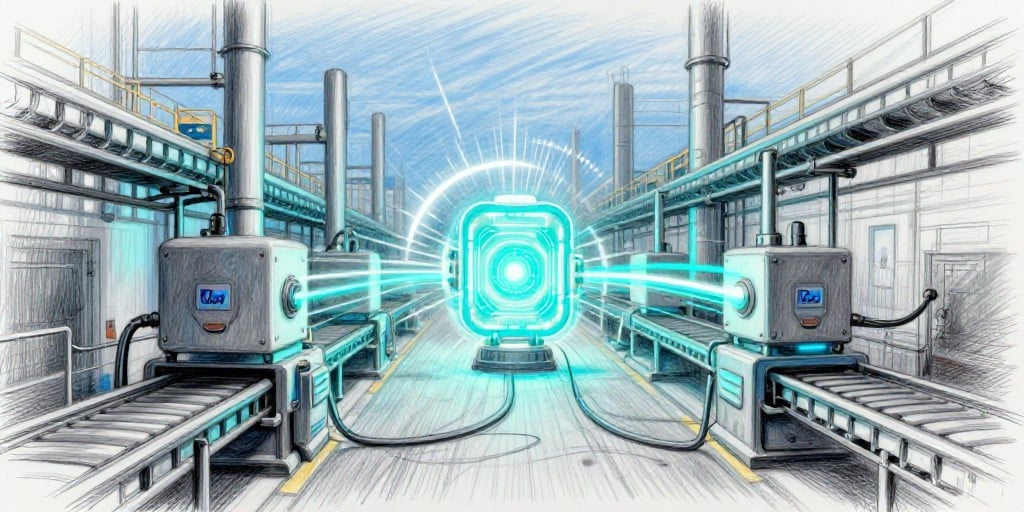
| Automated Service Stations | Deployment of AI‑controlled diagnostic rigs and conveyor‑based fluid‑handling systems | 40 % reduction in service time per vehicle | $12–$18 million per flagship location |
| Digital Asset Management | Cloud‑based CMMS (Computerized Maintenance Management System) integrating IoT sensor data for predictive maintenance | 25 % decrease in unscheduled downtime | $3–$5 million in software licensing and integration |
| Data‑Driven Franchise Analytics | Machine‑learning models forecasting demand, inventory levels, and workforce scheduling | 15 % improvement in labor‑to‑service ratio | $1–$2 million in analytics platform setup |
These systems collectively reduce the average service cycle from 35 minutes to 21 minutes, thereby boosting throughput by nearly 70 %. The automation stack also standardizes quality metrics, a critical factor for franchised operations that traditionally struggle with process variance.
2. Capital Investment and Return‑on‑Investment (ROI)
2.1 Capital Expenditure Profile
Valvoline’s franchise roll‑out requires a phased capital budget:
| Phase | Investment | Capital Structure | Payback Horizon |
|---|---|---|---|
| Pilot Deployment | $5 million | 60 % debt, 40 % equity | 12 months |
| Regional Roll‑out | $20 million | 70 % debt, 30 % equity | 18 months |
| National Scale‑up | $80 million | 80 % debt, 20 % equity | 24 months |
The debt mix is supported by attractive senior secured notes with a coupon rate of 4.5 %, reflecting the low‑risk profile of the franchise model’s predictable cash flows.
2.2 Expected Returns
Assuming a conservative 6 % gross margin uplift attributable to automation, Valvoline projects an incremental EBITDA of $4.5 million per year upon full national scale‑up. The net present value (NPV) of the 80 million dollar capital outlay, discounted at a 7 % cost of capital, is estimated at $13.2 million, implying an internal rate of return (IRR) of 17 % over the five‑year horizon.
3. Productivity Gains Across the Supply Chain
Automated oil‑change centers influence productivity at multiple points:
- Supply‑Chain Efficiency – AI‑optimized procurement reduces excess inventory by 20 %, lowering holding costs and freeing capital.
- Labor Productivity – Workforce scheduling algorithms match labor supply to predicted demand peaks, reducing overtime by 30 % and associated wage costs.
- Quality Control – Real‑time diagnostics ensure compliance with OEM specifications, decreasing rework and warranty claims by 12 %.
These improvements translate into a measurable increase in the company’s total factor productivity (TFP), which, if extrapolated industry‑wide, could raise the manufacturing sector’s output per labor hour by 0.5 % annually.
4. Macro‑Economic Implications
4.1 Industrial Technology Adoption
Valvoline’s investment in AI, IoT, and cloud analytics exemplifies the broader shift toward the Industrial Internet of Things (IIoT). The company’s franchise model is effectively a distributed manufacturing cluster, offering a testbed for:
- Edge Computing – On‑site data processing reduces latency for maintenance decisions.
- Digital Twins – Virtual replicas of service stations enable simulation of process improvements.
- Cyber‑Physical Systems – Integration of physical equipment with digital controls for real‑time optimization.
Industry analysts project that by 2030, IIoT adoption could add $2.6 trillion to global GDP, with productivity gains of 0.3–0.6 % annually.
4.2 Capital Markets and Investor Sentiment
The insider buying pattern—steady accumulation of deferred‑stock units at marginal price variance—signals confidence in the capital return profile outlined above. While social media sentiment remains negative, likely due to market uncertainty about the broader auto‑repair industry, the long‑term perspective of CEO Flees aligns with a value‑creation narrative that investors increasingly favor in capital‑intensive sectors.
4.3 Workforce Development
The transition to automated service stations necessitates a new skill mix: technicians with data analytics proficiency, IoT maintenance engineers, and AI‑ops specialists. This shift is likely to drive higher wage growth in the manufacturing and service sectors, contributing to broader economic resilience.
5. Conclusion
Valvoline’s recent insider buying activity, set against the backdrop of its aggressive automation strategy and capital deployment plan, underscores the interdependence of leadership confidence, technological innovation, and economic performance. By leveraging AI, IoT, and data analytics, the company is poised to enhance productivity, streamline capital investment, and create a scalable franchise model that could serve as a blueprint for other manufacturing and industrial firms. Investors monitoring the execution of this strategy should keep an eye on quarterly earnings, franchise growth metrics, and any shifts in the company’s capital structure, as these will directly influence the trajectory of share performance and the wider industrial sector’s productivity landscape.