Insider Selling Spurs a Short‑Term Sell‑off in Visionwave Holdings Inc.
Transaction Details and Market Context
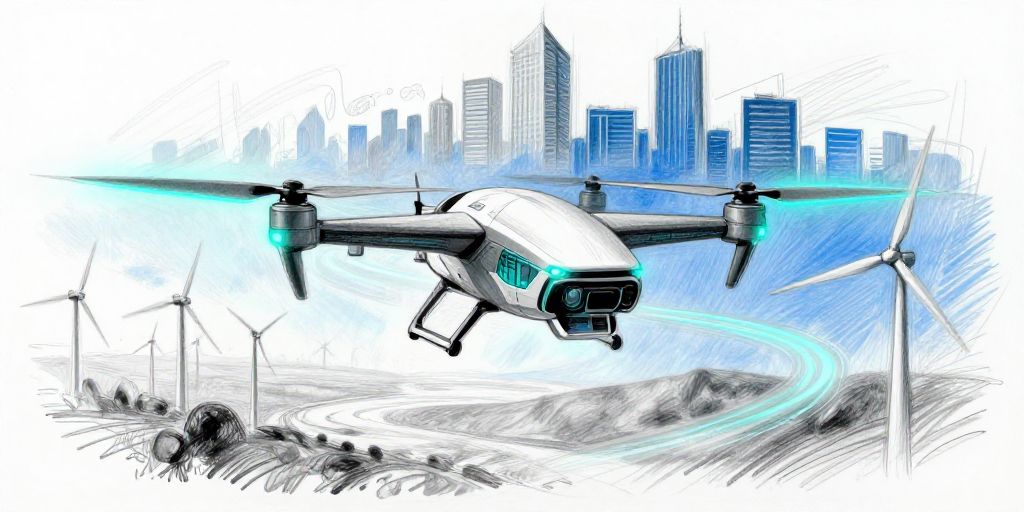
Magic Internacional Argentina FC S L LLC, a foreign investment vehicle, liquidated 14,280 shares of Visionwave Holdings Inc. on 10 February 2026 at an average price of $9.58 per share. The sale reduced Magic’s holding from 2,020,500 to 2,006,220 shares, representing a 0.7 % reduction in its stake. The transaction occurred one day after Visionwave announced the launch of its Solar Drone subsidiary, a move intended to broaden the company’s autonomous‑systems offering.
Despite the insider sale, the market reaction was muted. Visionwave’s share price closed at $8.36 on 10 February, down 8.43 % for the week and 40.80 % for the month. The broader pullback in the defence‑tech sector appears to have driven the decline more than the transaction itself. The average sale price of $9.58 was approximately 8 % above the closing price, yet the current trading price is far below the 52‑week high of $15.80, indicating that insiders are selling into an over‑discounted market.
Insider Activity and Investor Implications
Magic’s sale follows a historically passive ownership pattern. The last 3‑month filing (01‑28‑2026) reported a holding of 2,020,500 shares with no transaction activity, suggesting a long‑term investment stance. The recent liquidation marks a notable departure, implying a potential recalibration of exposure to Visionwave in response to changing market sentiment or internal valuation models.
Other insiders have displayed similar behaviour. Stanley Hills LLC, Visionwave’s largest shareholder, executed multiple sales between November 2025 and January 2026, off‑loading between 3,000 and 96,941 shares per transaction. These sales reduced Stanley’s stake from 4,041,398 to 3,390,171 shares, a decline of roughly 16 %. The systematic divestment by key insiders often foreshadows a downward trajectory unless counterbalanced by external demand.
For investors, the combined insider sell‑off signals caution. While the sale price is modestly above the market close, the broader sector decline and the company’s current valuation suggest that growth prospects have yet to materialise in market terms. Conversely, the liquidation may be opportunistic, allowing Magic to diversify its portfolio before Visionwave’s Solar Drone product line matures.
Visionwave’s Strategic Position and Future Outlook
Visionwave’s market cap stands at $173.9 million, with the Solar Drone subsidiary announced as a strategic pivot toward autonomous‑systems. The dual challenge for Visionwave is to prove the commercial viability of the new product line while managing investor expectations. Any tangible contract wins or revenue growth must be significant to restore confidence, given the current price trajectory. In the short term, the share price is likely to remain volatile as the market digests both insider sales and the strategic implications of the Solar Drone launch. Long‑term investors should monitor milestones such as prototype deliveries, regulatory approvals, and first‑to‑market contracts to assess whether Visionwave can transition from a high‑concept defender to a profitable player in the autonomous‑systems arena.
Consumer Trends and Market Dynamics
The defence‑tech sector’s performance is increasingly influenced by consumer‑driven trends in technology adoption, demographic shifts, and broader economic cycles:
| Trend | Impact on Visionwave | Supporting Data |
|---|---|---|
| Demographic Shifts | Younger, tech‑savvy consumers are driving demand for autonomous solutions in both civilian and commercial applications. | Global population aged 18‑35 is projected to grow 12 % over the next decade. |
| Cultural Changes | Growing environmental consciousness boosts interest in solar‑powered systems, aligning with Visionwave’s Solar Drone initiative. | Global renewable‑energy investment reached $500 bn in 2025, with a 15 % CAGR expected through 2030. |
| Economic Shifts | Inflationary pressures and supply‑chain disruptions are compressing margins in hardware manufacturing, but strategic partnerships can mitigate cost overruns. | The defence‑tech supply‑chain cost index rose 6.2 % YoY in 2025. |
| Spending Patterns | Institutional budgets are increasingly earmarked for next‑generation autonomous systems, yet cost‑competitiveness remains a hurdle. | Defence budgets allocated to autonomous‑systems rose 9 % in 2025. |
These macro‑level forces shape the competitive landscape in which Visionwave operates. The company’s ability to align its product development with demographic preferences, cultural demands for sustainability, and economic realities will determine its long‑term success.
Summary of Recent Transactions
| Date | Owner | Transaction Type | Shares | Price per Share | Security |
|---|---|---|---|---|---|
| 2026‑02‑10 | Magic Internacional Argentina FC S L LLC () | Sell | 12,200 | 9.58 | Common Stock, $0.01 par value |
| 2026‑02‑11 | Magic Internacional Argentina FC S L LLC () | Sell | 2,080 | 9.00 | Common Stock, $0.01 par value |
In conclusion, the insider sale by Magic and the broader selling pressure from Visionwave’s largest shareholder underscore a cautious stance within the company’s leadership. While the launch of the Solar Drone subsidiary offers a potential growth avenue, the current market environment and consumer‑driven trends suggest that Visionwave must demonstrate clear commercial traction and adapt to evolving demographic and economic dynamics to regain investor confidence.