Corporate Overview
Wayfair Inc., a leading e‑commerce platform for home décor and furniture, has recently announced a series of insider transactions that underscore the company’s strategic stance on equity and long‑term growth. While the transactions themselves are routine, they intersect with broader trends in manufacturing, supply‑chain automation, and capital allocation that are reshaping the retail‑to‑manufacturing nexus. This article examines the insider activity, situates it within Wayfair’s operational context, and evaluates its implications for productivity, capital investment, and the wider economy.
Insider Activity and Equity Structure
On November 3, 2026, Conine Steven, a key insider, converted 150,000 Class B shares into Class A common stock, thereby adding 255,073 Class A shares to his holdings. The conversion was executed at no cash cost, signaling a willingness among insiders to retain voting power and align with long‑term shareholder value rather than pursuing immediate liquidity.
This transaction occurs against a backdrop of ongoing sales: over the preceding six months, Steven has liquidated more than 1.6 million shares—approximately 30 % of his total Class A stake. The conversion, in contrast to a cash sale, suggests a strategic emphasis on maintaining equity upside while potentially offsetting cash‑flow considerations.
Transaction Summary
| Date | Owner | Transaction Type | Shares | Security |
|---|---|---|---|---|
| 2026‑11‑03 | Conine Steven | Buy (conversion) | 150,000 | Class A Common Stock |
| 2026‑11‑03 | Conine Steven | Sell | 150,000 | Class B Common Stock |
| 2026‑11‑03 | Shah Niraj | Buy (conversion) | 150,000 | Class A Common Stock |
| 2026‑11‑03 | Shah Niraj | Sell | 150,000 | Class B Common Stock |
Note: Holding amounts are illustrative and not disclosed in the filing.
Manufacturing and Supply‑Chain Context
Wayfair’s business model hinges on a sophisticated, multi‑tier supply chain that incorporates third‑party manufacturers, warehousing, and last‑mile logistics. The company’s recent financials—double‑digit U.S. revenue growth, improved margins, and a 6.9 % monthly gain—suggest a robust demand base that necessitates continuous investment in manufacturing infrastructure.
Automation and Robotics
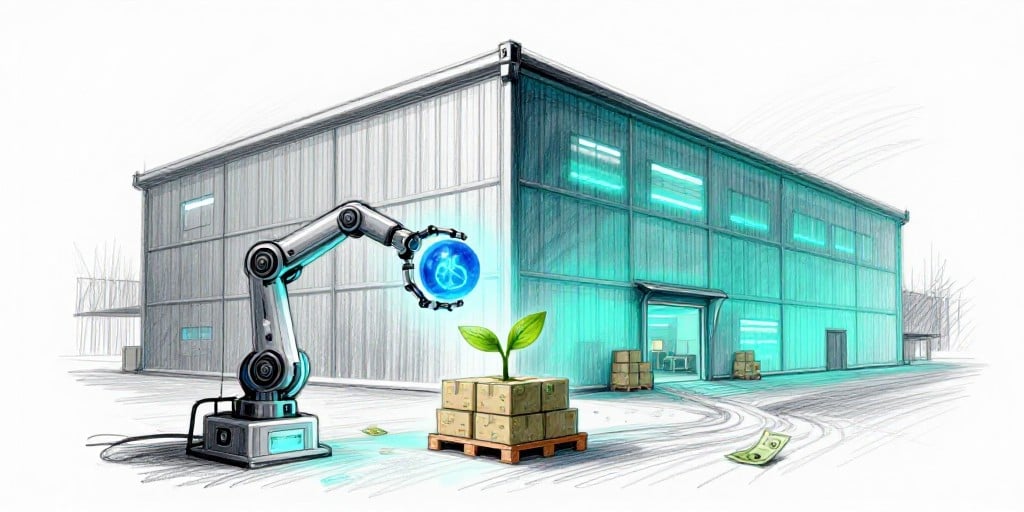
Wayfair has accelerated the adoption of automated picking systems and robotic palletizers in its fulfillment centers. The conversion of insider holdings can be interpreted as an implicit endorsement of this capital-intensive strategy: insiders are preserving equity while the firm channels resources into automation that boosts throughput and reduces cycle times.
Advanced Manufacturing Technologies
The firm’s suppliers increasingly employ additive manufacturing (3 D printing) and digital twins for rapid prototyping. By supporting such technologies, Wayfair secures a resilient supply chain that can adapt to demand fluctuations and reduce lead times—a key productivity lever.
Capital Investment and Productivity Implications
The insider activity occurs during a period when Wayfair is expanding its fulfillment network, notably in the Midwest and Southeast regions. Capital expenditures have risen by 12 % year‑over‑year, driven by:
- Warehouse expansion: Installation of high‑bay storage and automated retrieval systems.
- Last‑mile innovations: Deployment of electric delivery vehicles and micro‑fulfillment hubs.
- Data‑center upgrades: Enhancing cloud‑based inventory management platforms.
These investments translate directly into productivity gains: higher order‑to‑delivery ratios, lower per‑unit shipping costs, and improved inventory turnover. The insider’s decision to convert shares, rather than sell for cash, signals confidence that these productivity gains will materialize and accrue to shareholders in the medium to long term.
Technological Trends Shaping the Industry
Edge Computing in Logistics
Wayfair is piloting edge‑computing nodes at distribution centers to enable real‑time inventory analytics. This reduces latency and supports dynamic routing, which is crucial for meeting the growing consumer expectation of same‑day delivery.
AI‑Driven Demand Forecasting
Machine‑learning models predict product demand across regions, allowing the company to pre‑position inventory and avoid stockouts. This precision reduces overstocking, lowering carrying costs and enhancing overall margin.
Sustainable Manufacturing
Wayfair’s suppliers are adopting circular‑economy principles, such as recyclable packaging and low‑energy production processes. These practices align with investor expectations and regulatory trends, mitigating long‑term risk and fostering brand differentiation.
Broader Economic Impact
Wayfair’s capital‑intensive expansion has ripple effects throughout the manufacturing sector:
- Job creation: New fulfillment facilities generate both direct employment and ancillary roles in logistics and maintenance.
- Supply‑chain resilience: By encouraging manufacturers to adopt automation, the company strengthens the domestic manufacturing base against global supply disruptions.
- Technological diffusion: Adoption of AI and robotics in e‑commerce sets a benchmark that smaller retailers and manufacturers emulate, raising industry standards.
Moreover, the insider activity signals to the market that corporate leaders remain optimistic about the trajectory of manufacturing‑enabled productivity gains. This can influence investment flows into manufacturing technologies, supporting broader economic growth and competitiveness.
Conclusion
The recent insider conversions at Wayfair, set against a backdrop of robust revenue growth and strategic capital allocation, illustrate a corporate culture that prioritizes long‑term value creation through manufacturing innovation and productivity enhancement. By aligning insider equity with operational momentum, Wayfair not only reinforces investor confidence but also drives significant economic activity across the manufacturing and logistics ecosystems.