Williams Companies Insider Activity and Its Implications for Energy Markets
The recent filing of insider transactions by senior executives of Williams Companies, a leading mid‑stream energy infrastructure provider, offers a window into how corporate governance and executive incentives interact with broader dynamics in the energy sector. While the disclosed purchases themselves represent passive conversions of time‑based restricted stock units (RSUs) into common shares, their timing and scale carry substantive signals for investors and analysts who track the intersection of production, storage, and regulatory factors that shape both traditional and renewable energy markets.
Executive Purchases and Market Sentiment
On February 21, 2026, Senior Vice President Fazel Payvand announced a holding of 29,747 shares of Williams’ common stock, acquired through the conversion of RSUs. The transaction occurred at a moment when the share price edged from $72.50 to $73.50—a modest 0.01 % lift—yet was accompanied by a 230 % spike in social‑media attention. Similar patterns were observed in the transactions of President Chad Zamarin, EVP Larry Larsen, and SVP Wilson Terrance Lane, all of whom purchased significant amounts of common shares and RSUs during February 2026.
From a corporate‑governance perspective, these moves reinforce the view that senior leadership feels confident in the company’s long‑term value proposition. The RSUs are performance‑based, vesting over a three‑year horizon tied to financial metrics that are independent of share price, thereby aligning executive interests with sustainable growth rather than short‑term volatility.
Energy Market Context: Production, Storage, and Regulation
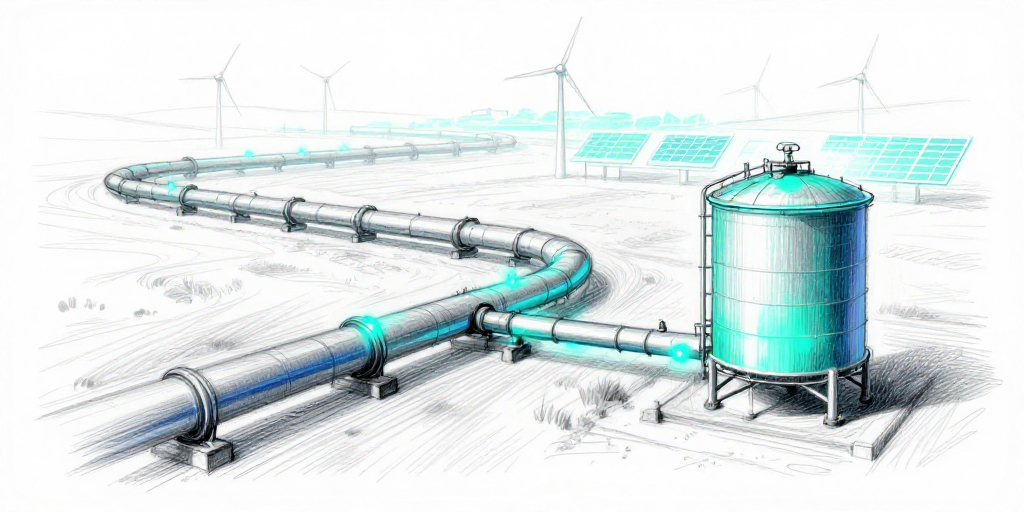
Williams’ core assets—natural‑gas pipelines, gas‑liquids transport systems, and storage facilities—play a pivotal role in the current energy mix. The mid‑stream sector has benefited from:
| Factor | Effect on Williams |
|---|---|
| Higher Natural‑Gas Prices | Increased throughput revenue, higher asset utilization |
| Growing Demand for Gas‑Liquids | Expansion opportunities in LNG export and domestic transport |
| Regulatory Shifts | Incentives for carbon‑neutral infrastructure, stricter pipeline safety standards |
| Geopolitical Tensions | Diversification of supply routes, heightened need for secure domestic pipelines |
| Renewable Energy Growth | Demand for complementary natural‑gas as a balancing resource in intermittent power systems |
In traditional energy markets, production volumes have rebounded following the post‑pandemic downturn, supported by commodity price recoveries. Storage facilities, particularly those associated with natural‑gas, have seen increased utilization rates as market participants seek to hedge against volatility. Regulatory dynamics are increasingly focused on decarbonization pathways, with the U.S. Energy Information Administration (EIA) projecting that natural gas will retain a 25–30 % share of the electricity generation mix through 2040, largely due to its lower carbon intensity compared with coal.
Renewable energy sectors—solar, wind, and battery storage—continue to experience robust growth, yet they introduce new variables into the market. Grid reliability remains a challenge as intermittent sources require balancing services that natural‑gas plants can provide cost‑effectively. Consequently, companies like Williams that operate gas‑liquids transport and storage are positioned to capitalize on this complementary demand.
Technical and Economic Drivers
Pipeline Capacity and Network Efficiency Williams has expanded its natural‑gas pipeline network, enhancing throughput capacity and reducing congestion. Technological upgrades such as compressor stations with higher capacity and the integration of real‑time monitoring systems have improved operational efficiency, lowering the marginal cost of transportation.
Storage Infrastructure The company’s investment in underground storage facilities has increased its ability to manage seasonal demand fluctuations. Economically, storage contracts generate steady revenue streams, while technically, advances in pressure management and safety protocols have reduced risk exposure.
Commodity Price Volatility Fluctuations in natural‑gas prices directly impact revenue. The current high price levels (approximately $3.50 per million British thermal units) have bolstered Williams’ throughput margins. However, sustained volatility requires robust hedging strategies and diversified asset portfolios.
Regulatory Incentives and Compliance Costs The transition toward low‑carbon infrastructure has introduced both opportunities (e.g., subsidies for pipeline expansions that facilitate renewable integration) and costs (e.g., compliance with stricter environmental standards). The company’s performance‑based RSUs, tied to metrics beyond share price, help ensure that executives focus on long‑term compliance and sustainability.
Geopolitical Considerations Global supply chain disruptions—stemming from geopolitical tensions in the Middle East and Eastern Europe—have underscored the strategic importance of domestic natural‑gas infrastructure. Williams’ assets serve as a buffer against international supply shocks, positioning the company favorably for investors seeking resilience.
Investor Outlook
The insider buying activity, coupled with Williams’ solid earnings growth and strategic emphasis on pipeline expansion, offers a bullish narrative for investors. The company’s price is within 1 % of its 52‑week high, indicating that upside potential is limited in the short term but that underlying fundamentals remain robust.
For long‑term investors, the dual exposure—common shares for immediate market participation and RSUs for performance‑based upside—signals executive confidence in the continued profitability of midstream operations. As the energy transition continues, Williams’ ability to provide flexible, low‑carbon transportation for natural gas and gas‑liquids will likely sustain its competitive edge.
Conclusion
Williams Companies’ insider transactions reflect a broader trend of executive confidence amid evolving energy markets. The company’s strategic focus on pipeline expansion, storage capacity, and regulatory alignment positions it well within both traditional and renewable sectors. Investors attentive to the interplay of production, storage, and regulatory dynamics may view Williams as a compelling long‑term holding in an era where natural‑gas infrastructure remains integral to a balanced energy transition.